Showing posts with label Bonner. Show all posts

Friday, July 18, 2014

In Defense of Heritage

Heritage is a funny thing. I have a funny relationship with it and have often felt that I needed to explain mine away. But John Ray recently wrote his second-ever blogpost about the complexities of heritage, and I have several posts waiting to hatch in the metaphorical incubator for blogs...so it feels good to take some time to talk about where I come from. Like the former president George W. Bush said, if it feels good, do it. (Kids, don't try that at home.)

Before talking about diversity, other cultures, what government policies should/shouldn't be implemented, controversial current events, etc., it is so important to understand and appreciate where we come from. In recent job interviews, I have frequently been asked to describe how I identify culturally. The interviews that didn't feature that question at least allowed me to "tell about" myself. And the tidbits I chose to divulge and not divulge in those moments are important.

So let's talk about heritage. My heritage. You can talk about your heritage, too, and you should! But here's me.

It is so hard growing up in small towns in the South. All I, and most of my friends, ever wanted to do was get out. I think that stems more from the "growing up" part and less from the Southern small towns. Oh, the burden of adolescence. I was, for years, uncomfortable with being Southern, being American, being White, and being whatever socioeconomic class I thought my family fit into while in middle and high school (let's just say I learned a lot more about the American economic system in college). I couldn't ignore the negatives and guilt associated with my social identifiers. So I spent years denying those parts of me or over-explaining myself to prove that I did not truly fit into the negative associations...or even the positive ones. We moved several times, and each time, I sought a friend group that was diverse in any number of ways...perhaps to prove I was not the sum of my social identifiers. In college, I learned to call many of my identifiers "privileged" and how to unpack the invisible privilege backpack (see Peggy McIntosh or Wikipedia for more information). I also questioned other parts of my heritage--my Christianity, my beliefs, my (dis)abilities--for the sake of questioning. Pick a social identifier, any social identifier: I questioned that one, too. I question. It's who I am. I think it is the responsible thing to do as long as you don't drive yourself crazy with it.

While I was in college traveling the world and having weekly conversations with my little diverse Bonner Program bubble on the predominantly white College of Charleston campus, I came to appreciate the fact that I could identify as American or Southern or White or Christian...and it not be an implicitly bad thing. As a junior in college, I got back in touch with pieces of those social identifiers that I love: I started listening to bluegrass and tried to pick up the banjo, I watched NASCAR races, I made apple pies from scratch, I fell in love with the poetry of liturgy. I embraced the positive parts of my heritage. I was honest and open about who I was without feeling like I had to explain away the negative parts: those unearned privileges and not-so-pretty patterns of history.

To my surprise, I was not welcomed into the diversity world with open arms. I had watched several of my Black female friends reclaim their natural hair as they embraced their heritage. It was such a celebrated act. But when I talked about watching NASCAR, people were confused because I didn't look like the "rednecks" they expected were into NASCAR. They certainly didn't celebrate my learning to embrace my heritage, and they didn't stop for the stories about watching races with my dad (we would both always sleep through most of the race) or about how memorable it was for me when Dale Earnhardt died (seriously, ask me to tell you the story and I might still cry). I guess it's one of those privilege/oppression things. I know the White community is overprivileged in a way that disadvantages other races. I know the same is true for Christians in America, people with a college education, middle-classers, U.S. citizens, etc. I believe it is important to look past social identifiers, sources of privilege, and even diversity to instead hear people's unique and untainted stories. To create my story, I have spent a lot of time considering who I am and all the privilege/oppression issues to which my heritage inherently connects me. I bring a very important piece to diversity conversations: myself. And I promise that I will constantly check my privilege...but also that I will be completely transparent about who I am, what my heritage is.

16 year-old me getting in touch with my roots (pun SO intended) via the oak tree in Greenwood

Wednesday, July 2, 2014

I had a blog once. It was awful.

This past year has been brutal on my blogging. To be fair, most of my desire to write was sucked dry by my Bachelor's Essay, which became a beast of a creation: 16 single-spaced pages of people's volunteer stories and my analysis of it all. I also spent what little free time I had applying for jobs and helping my husband plan a wedding. Well, the wedding thing worked out, but the job? Jury's still out on that one. Between my senior year coursework and helping the lovely Eliza Blades and Laura Mewbourn run the Bonner Leader Program at CofC, I had nothing left when the day was over. So I mindnumbingly watched a lot of Netflix: Breaking Bad, Psych, The Walking Dead, movies on movies on movies. I regret not blogging through my spring break trip to Guatemala and missing out on this reflective space that allows me to make beautiful connections through the craziest year of my life.

But I'm now living a new life, in a new state, in a new apartment, with a new name and a new roommate (hey, John Ray, who doesn't read over my shoulder nearly as much as I read over his). It feels like a good time to pick this blog up, brush off the dust, and reimagine what it will be.

Blogging can be like having an existential crisis all the time. I constantly ask: What should my blog be about? Is this life event significant enough to write about? Am I witty enough? Do people get my sense of humor? Will people care to read about that random thing that happened to me? Would they like more pictures? Does anyone actually read this thing? Is my life meaningful at all?! Okay, not the last one so much. A blog sometimes feels something like an unpleasant growth on the side of your face. People stare at it, but don't ask about it. The word "blog" itself is too uncomfortable to mention anyway. You can't just walk into any room and declare, "I HAVE A BLOG." No, that won't do at all.

But I've made the move from Charleston, SC to Louisville, KY, and, as uncomfortable as it is to say, I'd like to bring my blog along with me. I've traded the Atlantic Ocean and quaint historic houses for rolling green hills and a quirky industrial city with horse and bourbon obsessions. We're trying to find new digs and niches, and basically, I'm not sure where life is taking me from here. Right now, I'm reveling in the joys of watching any World Cup game I want and going to bed before 10 every night. I'm also marveling at how easily I get antsy and frustrated and irrational while my unemployed self sits at home all day staring at job listings. So perhaps my blog and I will be helping each other do some reimagining here.

Welcome to my transition space.
I make no promises, so expect only me. 

Thursday, February 6, 2014

Having Conversations: Martin Luther King, Jr. and the Civil Rights Movement of Today

How do we remember Martin Luther King, Jr. and the civil rights movement of the 1960s? Posting an inspirational quote from Dr. King as an obligatory Facebook status? Buying into racist stereotypes (it happened: http://www.charlestoncitypaper.com/HaireoftheDog/archives/2014/01/20/celebrating-mlk-day-with-fried-chicken-and-40s-of-oe)? Taking a day off from school and work? Participating in a “day on, not a day off” by doing service (it also happened: http://news.cofc.edu/2014/01/20/4-martin-luther-king-jr-day-2014-events-and-activities-hosted-by-the-college-of-charleston/)?

This is a couple weeks late, but I want to propose that we commemorate Dr. King and a civil rights movement necessitating our attention still today by doing what the activists of the 1960s did: have conversations. Perhaps that is overly simplistic, but as I have been thinking about the collection of rights people advocate for today (equality among races, sexual orientations, religions, abilities, nationalities and citizenship statuses), I have noticed a common thread. We struggle to have conversations.

Remember the great government shutdown of 2013? Yes, of course you do. It’s what happened when the government struggled to have real conversations. It happens on much smaller scales: within churches, on college campuses, in neighborhoods, across generations. When I try to remember the real conversations I’ve had in the past month, they’re few and far between. I mean, I talk to people all the time—those I agree with and those I don’t. But the times I have talked about real issues with people and actively listened to their side, civilly presented my thoughts, and each of us allowed the others’ opinions to matter significantly…those times are few.

As part of “Share the Dream” week on the College of Charleston campus, Jose Antonio Vargas, an undocumented American and successful American journalist, spoke about what it means to be American—both documented and undocumented. He connected immigrant rights with the civil rights movement of the 1960s. He gave the statistics and stories to propose that immigrant rights are important, that “no human being is ‘illegal.’” I walked away from his talk with a more meta message, though. His talk was much more about having conversations, and I think one of the clips he showed from his documentary, "Documented," encapsulated that. In the clip, he was interviewing an Alabama college student about recent legislation requiring students to present papers as proof of their citizenship when a man in the background of the shot decided to share his opinion, which greatly differed from both Vargas’s and the student’s. This man implied that all immigrants—legal or not—should leave the country because they are stealing jobs from Americans. Vargas didn’t shut him down (or let himself shut down), but allowed the man to express his opinion, asking him questions because he genuinely wanted to learn a different perspective from this man. And perhaps because Vargas listened to him, the man was then interested in Vargas’s story. They fist-pumped at the end of the clip, each apparently having learned something from the other. Heart-warming, right?

I don’t have to imagine how this conversation could have taken a different turn: I’ve seen it happen before. People get offended and defensive, calling one another “close-minded.” Liberal views and conservative views can both be close-minded, when everyone sees their own views as right and others’ views as wrong. There is no room for conversation.

I have been guilty of being on both sides of inability to have conversation. Now, I want the conversations, because out of conversations, movements are born.


Monday, November 4, 2013

in!Genius

I believe in the power of stories to create change.

But when I was asked to share my story, I was initially skeptical  that people would want to hear what I had to say. 
A wise person in my life likes to tell me that I will not be able to empower others if I don't first empower myself, so I began digging around in my life for a story worth telling, a story that might create change. 

On September 25th, a night of free thinkers and free stuff that we at the College of Charleston like to call "in!Genius," I had the incredible opportunity to share my story with a theatre full of students, faculty, community members, and my dearest friends. Now that it has been told, I'd like to pack it away for awhile and work on creating some new stories. But for those of you who missed it, here it is. Grab some popcorn and enjoy!


Sunday, March 17, 2013

Oceans Always Feel

Rivers never fill the oceans, but oceans always feel the waters reaching deep inside them. I guess they always will. --Jars of Clay and Leigh Nash, "Mirrors & Smoke"
I think too much these days, but probably not about things I should think about (i.e. classes, homework, what in the world I'm going to write my Bachelor's Essay about, whether or not I'll apply to grad school). I made msemen (Moroccan pancakes) for breakfast this morning, which was incredibly time intensive, and as I kneaded and kneaded (the thing about msemen is that they need lots of kneading), I thought and thought. And most of my thoughts returned me to Morocco...naturally...

Msemen with homemade pear apple jam

Last Monday, I was sitting under my favorite tree on the College of Charleston campus for the first time in months, and my lovely friend Rebecca (who is affectionately known as Lil Becca around these parts) happened to walk by. She also happened to stop and call me out of my deep thoughts about why some trees grow up to be so twisted. She had just returned from a mission trip to Haiti over Spring Break, and I was eager to pick her brain. I think a lot about missions because my service with Bonner and the Alternative Break program have really redefined what "mission" looks like for me. Becca has had a similar transformation but for different reasons. And sitting under that tree, we talked for almost half an hour. She was still processing everything at that point, and I had chills because of how much I saw myself in her. I had such similar thoughts when I came back from Morocco. The sudden, unexpected reminder of Morocco actually made me tear up a little (gosh, that's embarrassing), and I looked up at the clouded sky in an attempt to keep the tears from spilling out.

Becca talked about going back to Haiti in the future. She mentioned how she doesn't know if she will ever change the infrastructure of an entire country or if she will make a widespread difference wherever she is. Instead, she said it's enough if she can just change one person's life. It's the same realization I had in Morocco. When I was singing Brett Dennen to Kamal, the most neglected person in the orphanage, I was filled with a knowledge that it was enough for me if I could just bring him joy for a few moments. In fact, I realized by the last day that it was enough for me if I could allow him (and the time with him) to bring me joy or to change me in some way. Good grief! It changed me so much. I recognized thought patterns I had about people with special needs that I detested. There is nothing joyful about hating the way your own brain forms thoughts. There is nothing joyful (or easy) about changing those patterns either. But I've been working on it. I do think differently now about people with special needs. I don't see myself as "normal" anymore and people whose bodies and minds don't work the same way mine does as abnormal/different/"special." I think too about the statistics for child sexual abuse and depression/anxiety: reportedly, 1 in 4 women are sexually abused before they reach 18 and 1 in 4 people live with depression/anxiety. 25% doesn't seem so abnormal to me anymore... What actually feels abnormal is that talking about topics like mental/physical disabilities, sexual abuse, and depression/anxiety is so taboo in our society. Why don't we talk about these things? Why don't we know how to act around people who have experienced/are experiencing them?

I have other thought patterns that I notice now--about race, gender, ethnicity, social class--that I don't like. I know they are products of my culture and my experiences, but I still hope I will be able to change them. It feels like I'm trying to change the tides of an ocean--an impossibility--but why not try?  It was so encouraging to hear Becca voicing some of the same thoughts I've been having about just changing one person's life or just letting herself be changed.

I could end with that overused quote from Mother Teresa about how if you can't feed a hundred people that you should just feed one...but I want to end with oceans. They're all around me here in Charleston and they were just out of each when I was in Rabat and Chefchaouen. People exhort the power of oceans, their stability and consistency. We find solace in their constant motion and the calculability of the tides. We don't like when oceans are unpredictable and produce typhoons, hurricanes. But so often we fail to realize how transient oceans are. You probably never set foot in the same water twice, as rivers are always pumping more water in and stealing water away. Oceans are always changing, and I think they know it even though we fail to realize it.

Monday, February 4, 2013

To Change and Be Changed

I am trying to put words to my experience serving people with special needs in Morocco...it might be the hardest thing I've done in awhile, so be gracious and patient...
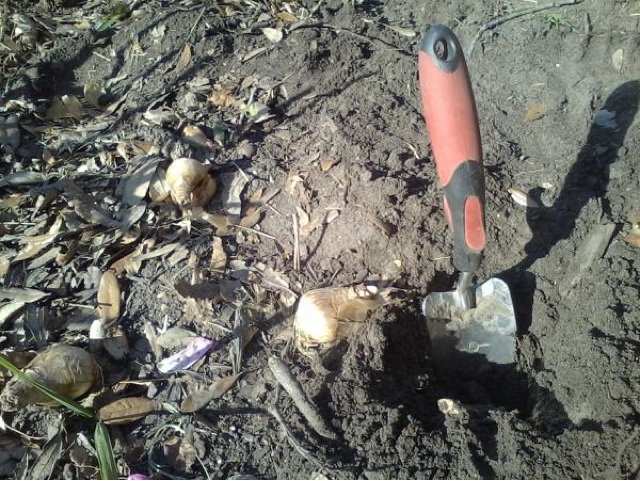
A couple Saturdays ago, the other Bonners and I volunteered with Charleston Parks Conservancy at Cannon Park to prune lots of plants for winter and to plant 2,000 daffodil bulbs. I grew up barefoot in my backyard during Southern summers, and I have beautiful memories of digging around in the soft black dirt with a white plastic spoon underneath my grandparents’ oak tree. When one of the Parks Conservancy guys handed me a trowel and a pair of gloves, I shoved the gloves in my back pocket and relished the feel of dirt on my bare skin as we dug deep to give each bulb a home. Later, the most painful and massive blister I’ve ever had formed on the stem on my thumb.
The process of healing feels very much the same for physical and emotional/mental/psychological wounds. The first day I had a blister, it hurt a lot. It was messy and I kept it covered with a Muppets bandage. The second day, a scab had formed over it, but every time I moved my thumb (A LOT), the scab cracked, and it was more painful than the first day. By the third day, things were looking up, and it felt like the healing process had really begun.
I had a similar experience in Morocco at my service site there. I volunteered in the special needs ward of an orphanage in the old, walled city of Rabat, helping the nurses there bathe, feed, and connect with the 27 people who live there. The first day was an utter assault on my sense: the hot, steamy bathroom smelled like human waste and was filled with people who were varying degrees of nude, most of their bodies twisted by physical deformities. I dove right in, and yes, it was unspeakably challenging. Feeding was a whole different round of difficulties, and I realized there is a learning curve that accompanies working with people with special needs because, just like any other human being, each person is unique with their own abilities and skills. When the bus came to pick us up after our first day, I felt frustrated, defeated, and downright disgusted with the way my brain was labeling the people I worked with all morning. I also felt like I needed a shower. My mind shifted back and forth between wanting to be callous, to do the service without letting it change me, and wanting to let the work change me even if it was going to be painful.
I had the next day off in celebration of the New Year, and as the group learned about the basics of Islam and toured Chellah, the Roman ruins in Rabat, I wandered along the line of change. After witnessing the tears and extreme frustration of one of the other women serving with me at the orphanage, I made my slow decision to let the experience change me. And I prepared my heart for a second day there.
The assault on my senses hadn't lessened at all. It was actually a lot more challenging (this word falls so short...) to look people--with whom I'd attempted to make connections two days prior and whose stories had begun to unfold (most of them had been abandoned, left for wild animals to finish off)--in the eye while bathing them, feeding them, seeing how the nurses treated them. I was physically queasy for the entire morning. My mind didn't know how to put language to what I was doing, what I was feeling, or even who these people were. I spent a long time singing to Kamal, one of the boys (he looked 8, but I think he was actually my age) who was completely bed-ridden, and I just didn't know what in the world I was doing there at his bedside. What would change in his life because of my actions? What would change at the orphanage because I was there? Would the nurses remember me? Was I helping at all or creating more work for them? I was full of questions without answers. (Story of my life, it seems.)
Later that day, I visited a traditional Moroccan bathhouse, or hammam, and had a really incredible experience that turned my day into a beautiful circle: I began by bathing someone else and I ended by having someone else bathe me. This launched me into the healing process. I realized it didn't have to be about a long-term change or about having people remember me/my service. I was there to create moments of joy for the people at the orphanage, to lighten the loads on the nurses' shoulders if only for a few days, to experience and let what I experienced rip me apart so I can be a different person. And the ripping began. I have struggled to put into words the pain, the grace, the peace, the frustration at myself in conversation and now here. I don't know that anyone other than the three Bonners serving at the special needs ward will truly understand the ripping and healing process I am still going through...

Now that I have been back for several weeks, I think I have finally been sewn back together. There's scarring, though, and who knows how long that will be present. I have been changed, so maybe forever. The blister just below my thumb is beginning to scar, as well. I stopped by Cannon Park on a run yesterday and saw that the daffodils are popping up from the dirt. Maybe flowers will be blooming by the time the scar fades away.

I think to bring about change, you must first allow yourself to be changed.
Blisters must form for the soil to welcome daffodil bulbs.

Friday, January 18, 2013

Sunday in Morocco: Everything I Needed

Morocco...where do I begin? I've been back in the country for a week and a half, and I am still processing EVERYTHING. So I won't begin with completion, but feel free to read my incomplete thoughts and questions about the most difficult trip I've ever been on.

My grandma said she saw it in my eyes: the anxiety, the knowledge that this trip would be different. She is much wiser than I am. I wasn't conscious of that knowledge I carried as I was scrambling around on the morning of Friday, December 28th--departure day. I should have known all along. The planning process was hectic...even more so than normal. I remember one Thursday when I’d spent over four hours in the Center for Civic Engagement watching my plans and my confidence as an Alternative Break trip leader (and leader in general) spiral downward. I got back to my room that night around 10:30 and melted against the closed door. When departure day arrived, I had given up all hope of the trip going “according to plan.” I didn’t even want that anymore. I hoped instead for the flexibility to respond to the chaos I was sure would happen.

And chaos happened.

The travel days were a nightmare I am not ready to relive, nor can I see the good in the experiences yet. Our first full day at the homebase (Sunday), my group of junior and senior Bonners had our orientation with Cross Cultural Solutions (CCS), a truly incredible organization that facilitates sustainable international service and productive cultural exchange. Mohammed, the country director in Morocco, is absolutely fantastic, and as he introduced us to the basics we needed to know about Morocco and about our three service sites, I felt relief sink in, all the way down to my socks (which, in an effort to make a good first impression on the CCS staff, actually matched that day). As a trip leader, I was hyper-aware of the impressions my entire group was making on the Moroccan staff and of the reactions of my group to what Mohammed was saying. There was nervousness when he talked about women in Morocco (Morocco is an Islamic country and most women wear head coverings. We were also unsure at that point how society treated them.) but a definite sense of excitement when we heard exactly what we would be doing at our service sites. I’ll talk more about that in a later post...still processing a lot...

We learned some Arabic after our orientation, and even though I consider myself blessed with the gift of quickly picking up languages, I still only know a few phrases: la, shokran, kidayr, smiti Elizabeth, snu smitek, bslama. Oops. It was fun to try, though.

The afternoon was completely free for us to explore and adventure, and in a moment of swift decision-making, Eliza (my fearless co-leader who also might be the single most amazing person in the world) and I decided our group was going to take a walk to a nearby park.I had low expectations...a park in Morocco? But as we wandered through beautiful, luxurious streets where the homebase was located, I spotted a vibrant green polo field, houses of ambassadors to Morocco mushroomed with satellite dishes, and flowering plants dripping over tall walls. I let my guard down a bit. I was in desperate need of some beauty after a day of international airports, lost luggage (just mine), a seven hour flight next to one of my trip participants who vomited the entire time, and a general lack of sleep.
The park, le forêt urbaine, was breathtaking. It was an expanse of land filled with trees straight out of Middle Earth and sudden soccer fields and playgrounds. There were trails that people were walking and running. It shocked me because I have, up until that point, made generalizations that exercise is a luxury to which only Americans are privileged. I assumed people in other countries do not have the "luxury" (really, it's an issue of enough capital, I think) of eating so much they need to exercise or the luxury of time and space to do so. I was wrong. Green space in a big city also used to feel like a luxury only in the States. Again, I was wrong. People in Morocco have those luxuries, too; at least the people in that particular wealthy neighborhood in Rabat do. What other places in the world defy my assumptions? Do Moroccans see spaces like this park and moments of exercise as luxury? This was the beginning of Morocco shocking me, making me think twice about everything...
We spent a while in le forêt urbaine, soaking up the sun (Morocco is a cold country in the winter with a very hot sun), meandering along paths, attracting all sorts of attention as Americans have the tendency of doing in other countries. We took pictures of the sunlight mystically filtering through tall white trees and scoped out the people of Morocco. It was restful and thought-provoking and everything I needed for the day.


Hope. Hope fell over me on Sunday. After great chaos, Sunday was a day of reclaiming: reclaiming why I was there, why I love travel, why I love languages, why I love service. Strangely, though, it wasn't me who got to do the reclaiming; Sunday reclaimed me. I needed that. Why? You'll see...oh, you'll see.


Monday, May 7, 2012

The Things I Carried


Do you know that moment when you think you’re  completely packed up and ready to move out only to discover an entire cabinet or drawer that you neglected? Usually, there’s nothing too important in it. The important things get packed up right away, checked and double checked. But I think the leftover things in that last cabinet or drawer are important in their own telling way...
Last week, this is what I found:

A can of Orange Fanta: Coming into this year, I would have told you that was my favorite soda. It contains no caffeine, but it is bursting with bubbly orange sugar. I discovered it years ago. Now, though, I have this obsession with Dr. Pepper Ten. I know, I know...it’s not for women. Whatever. DP10 got me through my fiction writing class during the first half of this semester...the days when I left my room at 9:15 and went from class to work to the Children’s Museum to class to Bonner meetings, lucky to be back home by 9:30 to start my homework for the next day. On top of that, fiction writing was a hard class. My professor challenged me in so many ways, and after hearing him bark out my last name frequently in my twice a week, three hour long class, I was weary. At the end of the class, I actually cranked out a halfway decent short story and had a bonding moment with my professor where we realized we were both believers. He had a lot of good advice for this young, aspiring writer. Was it worth the stress and exhaustion? Probably. But I think Dr. Pepper Ten will forever taste like the sound of my name being barked at me.


Partners in Crime
A bottle of green spray paint: In perhaps one of my most unique and creative Halloween costumes ever, I used the spray paint to make a Psych t-shirt. Inspired by the “American Duos” episode of my favorite television show, my roommate and I were Gus as Michael Jackson and Shawn as Kurt Smith of Tears for Fears, respectively. It was so complicated to explain to people, but the looks on the faces of the people who follow the show were priceless. The costume was fairly accurate in describing our friendship, too. Like Shawn and Gus, we do our share of ear flicking and driving each other crazy, But in the midst of the INSANE  year we both had, it was good to have a partner in crime willing to make banana pancakes in the shape of the Millennium Falcon and make life seem just a little sunnier. We spent our last night together on Sullivan’s Island, just watching the right angled light beams from the lighthouse pan overhead and talking about all the adventures we’d had--the good, the bad, and the incredibly ugly. We’re going to be roommates again next year. It’s going to be awesome.


A jar of apple butter: From the Mennonites of Abbeville, SC--it’s amazing. Seriously. The only ingredients in it are apples and spices, no sweeteners and no preservatives. I appreciate that. It was a perfect discovery from last summer, since dairy was no longer a dietary option after my trip to Honduras and I needed to find new breakfast foods I could eat. Spread some Mennonite apple butter on a couple slices of toast in the morning and life was very sweet. Even more, I appreciate that my grandparents are the ones who supply the apple-y goodness. They were my rock of stability in the midst of moving around a lot growing up: they were always in Greenwood, in the same house with the same huge tree in the backyard with the same unending love just when I needed it. They are both amazing people.
A bar of soap: It was still in its little box, just waiting to be used. The soap seemed insignificant until I recently found a list of all the random things I wanted to do this school year that I typed up on my iPad back last summer when it was brand new. This list included everything from “Cook supper for one person at least once a week” to “Sing in the shower frequently, but don’t feel obligated to shower every day.” (The latter is my explanation for not finishing off my soap supply for the year.) Why would I make it a goal to shower less? I blame it mostly on my trip to Honduras. While there, we had (if lucky) an hour of “running water” each morning. That didn’t translate into a hot, comfortable shower...it meant a trickle of cold water that couldn’t really get all the shampoo out of your hair. It made me more aware of the massive amount of water Americans use daily. We really take our clean, seemingly unlimited access to water for granted. So in an effort to be a better steward of the water I’ve been blessed with, I spent this past year taking shorter and fewer showers. For my information, see Water Missions International's website. I’m quite smitten with their organization.
A bottle of pure maple syrup: Half-used and left over from some sweet potato souffle, it was a remnant of my goal to cook for others. I knew I liked to cook, particularly for other people, but I mostly put this goal out of my mind once life got crazy (basically day 1). I was lucky if I got to cook for myself, much less anyone else. About halfway through fall semester, though, I grew very uneasy with the way I was doing life. Still without remembering this idea that I should cook weekly for other people, I decided to start, with Courtney’s help, cooking one meal a week for the people on our hall. I sought organic community, and what’s more organic than the people I live with? This easily became the most rewarding and exciting part of my week. Courtney and I tried out great recipes, made great friends, and created a home for ourselves and others in Rutledge 407. I didn’t even realize I had accidentally fulfilled one of my goals until a couple days ago. Crazy. Perhaps the saddest part of the year ending has been realizing that even when we go back in the fall, it won’t be the same. Next year, we’ll live with an entirely different crew...I guess that’s both saddening and exciting.
That’s it. The last year in five random household items that were almost abandoned when I moved out. It’s too simplistic. It’s much too final. But there it is. 


Tuesday, April 17, 2012

The Awkward Blogpost

Something inside of me has been rebelling against the word "awkward" for a while now. It's so much a part of my generation. Every encounter is ranked on a scale of 1 to 100: how awkward was it?

Eating dry cereal for breakfast: 12
Walking down a long hallway toward someone you know and having to decide when to say hello and where to look the whole time: 46
Getting a Facebook message from someone who likes you a whole lot more than you like them: 78
Accidentally starting to pray at the same time as someone else during popcorn prayer: 107!

I propose that the only reason we interpret all of life's events as awkward or not awkward is because of the existence and popularity of the word "awkward" itself. Really, it's an awkward situation. Back when I was a small child (to clarify...that could mean 6 or 9 or 15), the word wasn't popular. There wasn't much concept of awkwardness. Things were weird. Things were different. Things were uncomfortable. I didn't know what to do with my hands. Life was less awkward for me because I didn't know what awkwardness was. I didn't understand that one day I would see a Citadel cadet running down Calhoun St. in the center of April at 1:16 in the afternoon wearing a beanie and comment on how awkward it was.

We create awkwardness in ourselves and in our society by having and using the word. Suddenly, any feeling that isn't complete happiness is translated into awkwardness. Even the idea of awkwardness is awkward. Awkwardness is taking over the American culture. Everyone loves Zooey Deschanel. Quirky is the new normal. Awkward is the new everything.

I think more people get drunk and get more drunk now because of the word. It's a reason to drink: I feel awkward around lots of people. I feel awkward dancing. I feel awkward when I'm not drinking and the people around me are. The drunk people around me are awkward and it makes me feel more awkward. The solution: Drink away the awkwardness. I don't know about this. I don't drink. I just think about alcohol and awkwardness. What a pair they must be!

I don't like when my hands smell like food. It's distracting. I try to accomplish things, but I smell onions and remember the pizza I had for lunch and don't accomplish anything.

I tried to replace the word "awkward" with "stupid," but it was an awkward/stupid idea. It didn't mean anything. It was like using "laughing my feathery armpits off" instead of its less polite counterpart. Essentially, you mean the same thing, but for some reason--morality concerns, nearness of children, speech impediment or hearing impairment--you just replaced the "bad" words with "better" ones. It doesn't change the concept. Instead of saying "I laughed so hard it was awkward," I tried to say "I laughed so hard it was stupid." Nothing. No difference. Apples and oranges.

Mr. Tony of "PTI" and "The Tony Kornheiser Show" likes to say, "The kids have a word for that these days: awkward!" He also likes to do the penguin dance.


Someone somewhere decided to call this postmodernism. It's really just awareness of the language I'm using and how it shapes my thoughts and perceptions. But that's not official enough to teach an entire Western Civ lecture about so they call it "postmodernism." I like things that are meta and postmodern...like "Ferris Bueller's Day Off" and "The Office." I like when things think about themselves, what they're doing, why they're doing it, and then make fun of themselves. I wish the word "awkward" were more aware of itself. I wish mini microwaves existed named "Hitler." I like that I can use quotes and throw everything's "meaning" into "question." It feels like power.

Maybe technology makes us awkward. We text and message and chat...via technology. And so we're hyper-aware of ourselves when we experience real, face-to-face interactions with other humans. Suddenly, without the assistance of emoticons and "lolz," we don't know where to put our smile or our arms and it's awkward. But technology can only make us awkward because the word "awkward" exists and allows us to understand the concept of awkwardness.

The elevator in my building got angry and then tried to take me to the fourth dimension today. It was awkward.
Autocorrect on my iPad changed "wuwei" to "Susie" in my Religions of China and Japan term paper and it was awkward.
I listened to song by Jude Moses called "Mistaken Hands" and thought he was singing: "I'll make you sufferrr. I'll make you die." He was actually singing, "I'm make you supper. I'll serve you wine." It was awkward.


I wrote a blogpost about awkwardness and how much the word affects our lives and it was awkward.

I feel like the Knights Who Say Ni...because I can't stop saying the word "awkward." Ah! I said that awkward word again! Ah! It's so awkward that I can't stop saying it! Now I feel even more awkward! Ah!!!

I fear that if we stop the word now, we will lose ourselves. What will happen to our skepticism and cynicism? What will happen to self-awareness and these feelings inside of us that alert to awkward moments? Remember awkward turtle? I liked to make up random awkward animals when I was in high school. I felt cool when I did it. I wasn't. I was just another teenager with braces, lame jokes, and "original" ideas, the very definition of "awkward." Henceforth, you can just call me "Awkward posterchild."


Coming soon: The Hipster Blogpost
A look at the word "hipster" and an explanation for why they burn their tongues all the time.

(Not really...I just wanted to make you feel awkward about another popular word/cultural phenomenon. You're welcome.)

Monday, March 5, 2012

I'm Going to Honduras...Again!


Good things come to those who eavesdrop.


Ok maybe not. But I did learn in my Fiction Writing class that Wikipedia, staring, and eavesdropping are three best friends for writers (I also learned that creativity arrives through discipline and that I know nothing). Usually when I eavesdrop, I hear random college chatter that doesn't mean much to me. But over 6 months ago I overheard some seriously important information...I was gathered around a bonfire on Seabrook Island with several of my fellow Bonners and our director. As smoke bit at my eyes, I heard something like this:
Yeah, we're going to try to do two Maymester trips this year. One will be to wherever the student leaders choose and the other is going to Honduras. 
How do you already know that one is going to Honduras? 
Dr. Folds-Bennett and Mary Pat are planning that one. Dr. Folds-Bennett has worked with an organization in Honduras before so they'll be working with that NGO. 
Is there a student trip leader for that one yet?
The last question was actually mine. It was one of those moments where your voice speaks without your permission. But I managed to insert myself into the conversation just long enough to hear all the details that had been established so far before I raced up the dark path to the cabins where we were staying. I grabbed my cell phone off my bed and immediately called my parents. If there was an opportunity to go back and work with LAMB (the organization Dr. Folds-Bennett has experience with and the very one I spent three weeks with last summer), I wanted to jump on it fast. I remember standing on the porch of my cabin in the sticky evening air, pacing up and down as I related the details to both my mom and my dad.


What has now become "Honors in Honduras," was once just an idea of a new model where the Center for Civic Engagement pairs up with the Honors College at College of Charleston. Why Honduras? Simply for the reason that Dr. Folds-Bennett (henceforth known as "TFB") had connections there.


I didn't actually agree to be the student leader until I was on the Alternative Break trip leaders retreat. Everyone paired up for spring break trips and the other maymester, and it was apparent to everyone except me that I would be the student leader for the Honduras trip. I may have just agreed by default. I wasn't sure I wanted to go back to Honduras because it was such a hard trip for me, but I certainly didn't want to pass up an incredible opportunity just because my last trip there wasn't bump-free.


So last Wednesday we had our first class...
It was such a strange feeling to sit in a circle (it was more of a rectangle really) and discuss Latin American history and U.S. foreign policy with TFB, Mary Pat, and the other eight students going on the trip with me. All eight students had been through an application and interview process, where the most we could tell them about what we'd be doing in Honduras was that we were waiting for the team at LAMB to decide for us. We were trying to live the asset-based community development model...this is a hard thing to do when you're trying to plan both a class and a three week trip.


After finalizing our team, we started having weekly meetings to discuss fundraisers, practice Spanish conversation, talk about the alt break components (drug- and alcohol-free, diversity, education, orientation, training, reflection, reorientation, strong direct service), and prepare for an intense honors course in community-based research where we would learn the ins and outs of NGOs, program management, Honduran politics, capacity building for projects, and asset-based community development. Eventually, we will put together an entire project to execute while in Honduras working with LAMB based on what they tell us is their area of need.


That's a lot of technical words, I realize.


All of this is to say that since August, this idea has been unfolding, and now it's happening. It's exciting. It's terrifying (I'm taking eight girls to Honduras for three weeks?!?). It's oddly surreal.


I think about the time I had getting to Honduras last year. It was so last minute and there were so many weeks where I just really didn't know if I was going to be able to go. I took a lot of blind steps, and God showed up in awesome ways to get me there. And now I have the opportunity to go back and to take other CofC students--some who are believers and others who aren't--to this place where God is so real. Again, it's surreal. And I am honored to be a part of it all.

Tuesday, January 31, 2012

"Freedom's just another word for nothing left to lose!"

Freedom.

This word has been indiscreetly stalking me for the past month or so. If I'm being honest with myself, it's actually been stalking me for much longer than that. As an American, perhaps a reluctant one, "freedom" is a word I casually throw around. YES. I take advantage of my freedoms...in regards to speech, religion, voting, education, you know what I'm talking about. I wasn't necessarily born with a silver spoon in my mouth (that's a thing, right?), but I have been given some of the most incredible opportunities in my life. I grew up well fed and loved. I never worried about where money or meals or rest would come from. I have had the joy of traveling to San Francisco, Costa Rico, Honduras, Puerto Rico, and all along the east coast of the States. And most importantly, my parents raised me to love God and to seek His kingdom first in all things. Why am I saying all this? I think it's to remind myself that I am FREE.

I'm a college student. I feel bound by budgets and homework. I feel bound by the 24 hour day that is always, without fail, much too short. I feel bound by the knowledge that I have and by the knowledge that I lack (Sophomore=wise fool). But I have been set free.

Guess what.
In case you haven't heard, there are more slaves today than at there were at any other time in history. 27 million is the number people keep shoving down my throat. Or attempting to shove down my throat. 27 million is quite a bit to swallow. For me at least. I knew human trafficking was an issue in our world today, but that was just head knowledge until Christmas break. First, an alternative break trip to Puerto Rico made me question where goods I use everyday (particularly coffee) come from. A lot of them aren't exactly rainforest friendly, which was disconcerting to me after spending several days working closely with El Yunque, one of the most diverse rainforests in the world. A lot of them are also not human friendly. For instance, coffee is grown in areas where the rainforest has been cleared so that the coffee plants can get full sun. Much of the coffee produced is harvested by people who are underpaid and ill-treated, many of them children. Coffee is one of the major products that people in the first world can enjoy at an inexpensive price because of the slave labor involved in the process.

A couple weeks after Puerto Rico, I went to a huge worship gathering in Atlanta called Passion. Let me rephrase that: I joined 46,000 other college kids and leaders in overtaking downtown Atlanta, the Georgia Dome, the CNN Center, the Georgia World Conference Center, and all surrounding areas. And in case you haven't heard yet, our focus was freedom. Here's a look at the happenings:
http://268generation.com/passion2012/#!/freedom/
http://thecnnfreedomproject.blogs.cnn.com/2012/01/05/

(Sorry. They refuse to be hyperlinks. Be old school and copy paste.)

Yeah. It was awesome. But it was also heart breaking. I see things in black and white. I firmly adhere to the idea that if you aren't part of the solution, you're part of the problem. So I thought that because I wasn't consuming only fair trade products or working to rescue girls in a red light district, I was enslaving people, stealing their voice, being an oppressor. It broke me. I felt the need to act on my brokenness but didn't know what to do, which just made me feel more broken. I then made the mistake of being too down and out to do anything. Awareness of the problem didn't lead me to bold advocacy; it led me to curl up in a ball and do nothing. Not literally. I am not a cat. But I did figuratively curl up in a ball. I enslaved myself in my inability to save all 27 million. How stupid is that?

I'm trying to see shades of gray. Coffee is a social drink for me. If I stop drinking coffee, then I'm less likely to spend as much time talking with my mom, my grandparents, random new friends. But I can spring for fair trade, shade grown coffee. That's action without complete inaction. (Does that statement make sense?) I realize that I can't save all 27 million on my own. Mother Teresa once said, "If you can't feed a hundred people, then feed just one." And my beloved suitemate Megan thinks Mother Teresa is one of the greatest people ever, so I'll trust that I can just feed one or, in this case, just free one. Also, I'm not alone in trying to free people. There were 46,000 other people who collaborated to give over $3 million to freedom organizations at Passion with me. That's huge. Even huger (in Charleston, we say that word like "you-gee") is that God is also on our side. Isaiah 58:10-12 have been the driving verses behind my life since spring of my senior year in high school (I did the math just now...that's two whole years). Those verses plus some kept surfacing during Passion--on Rebecca's (my dear friend who likes kittens a lot) and my white flags, during a panel discussion with inspirational freedom advocates, in one of the main talks. God is all about some freedom.
6 No, this is the kind of fasting I want:
Free those who are wrongly imprisoned;
lighten the burden of those who work for you.
Let the oppressed go free,
and remove the chains that bind people.
7 Share your food with the hungry,
and give shelter to the homeless.
Give clothes to those who need them,
and do not hide from relatives who need your help.

8 “Then your salvation will come like the dawn,
and your wounds will quickly heal.
Your godliness will lead you forward,
and the glory of the LORD will protect you from behind.
9 Then when you call, the LORD will answer.
‘Yes, I am here,’ he will quickly reply.

“Remove the heavy yoke of oppression.
Stop pointing your finger and spreading vicious rumors!
10 Feed the hungry,
and help those in trouble.
Then your light will shine out from the darkness,
and the darkness around you will be as bright as noon.
11 The LORD will guide you continually,
giving you water when you are dry
and restoring your strength.
You will be like a well-watered garden,
like an ever-flowing spring.
12 Some of you will rebuild the deserted ruins of your cities.
Then you will be known as a rebuilder of walls
and a restorer of homes.

And if God is all for freedom, I should be, too. I found a lot of hope in the last few verses. For a while, I've loved the image of being a "well-watered garden" and an "ever-flowing spring," but I never took the time to read on. In my state of brokenness and despair for the enslaved people of this world, I needed to know that God could use me to be a "rebuilder" and a "restorer." I pray now that I will be broken enough to care, but not too broken to be effective. I want to be a rebuilder and restorer because I have been rebuilt and restored!


So now I have some questions for you:
Have you acknowledged that modern day slavery is happening? Because ignorance and indifference are not options.
Have you enslaved yourself to something?
Are you singing "Me and Bobby McGee" by Janis Joplin? If you aren't, you should be. So here you go:
Now to get that song out of your head, enjoy some All Sons and Daughters:

Sunday, January 1, 2012

Adventurings in Puerto Rico

A Week in the Jungle, the Mighty Jungle

I was sick almost the entire week. A sore throat drove me to bed early every night and then a cough woke me up early, early in the mornings. I didn't mind so much. I just sat on the little porch at the Evangelical School for the Deaf where we were staying and watched as the wind rolled in off the coast and pushed the dark clouds away towards the lush mountains. And so a new day was born to the sound of Gungor (their new album "Ghosts Upon the Earth" pouring through my headphones) and a gusty breeze.

Puerto Rico: The 51st State

As I prepared with my fellow freshman and sophomore Bonners to travel to Puerto Rico for an alternative break trip, I kept asking what it meant for PR to be a US territory. No one, not even the Google Machine, could give me a satisfactory answer. The realization that, in an almost paradoxical way, PR is its own country while still being part of the United States gradually rolled over me. Alright, mystery solved for me...I doubt I could adequately explain it for anyone else. Perhaps this is mostly because you should go and uncover the answer for yourself! I fell in love with the place. It tasted strongly of plantains, Spanish, and the unique flavors that I love of Hispanic culture, but it was also oddly like home.

"Put your faith in what you most believe in."

The interesting thing about Bonner is that the only thing we all have in common is our love of service. We all believe in service, in the power of community. Other than that, we're all fairly diverse. And as far as service goes, we all have our various reasons for even doing it.
But it's what we do. We all get together and serve. On this trip, we worked at multiple service sites, which is always lots of fun. Different people shine in different places, and it's always exciting to see people shine in places that aren't necessarily in their comfort zone. We spent the first two days working at El Hogar de la Serenidad, a home for boys with substance abuse problems that is trying to get off the ground. People scraped paint off the banisters of the many balconies attached to the house, preparing them to be painted (which we did on our second day there). Others cleaned up the outside, using everything from a power washer that sounded perpetually angry to a very sharp machete, the choice of the Puerto Rican natives. I worked with a couple others on cleaning the six bathrooms. Memorable moment from that service site: I learned what a bidet was in a very close encounter while cleaning one. I'll let Wikipedia explain it for you if you're confused.

It's often hard to do what seem like menial tasks that aren't really helping people. So while we were scraping, sanding, scrubbing, and shearing, we smiled but whispered questions as to why this was so important for us to spend so much time doing. Once I read a mini devotional on a mission trip called "Mopping for Jesus." I don't remember exactly what it was about or what the scripture was that accompanied it, but I do know that it asserted that no act of service is too small. Yes, mopping may feel menial, but you can still do it for God and it won't be a waste: With all this going for us, my dear, dear friends, stand your ground. And don't hold back. Throw yourselves into the work of the Master, confident that nothing you do for him is a waste of time or effort. (1 Corinthians 15:58 MSG) I was reminded of this while I impatiently painted and had to pause to consider why I was painting. It wasn't for me. It was for God and it was for the people who would be helping the boys. How can a painted balcony or a clean bidet help boys overcome a substance abuse problem? Shoot. I didn't know, but it didn't matter because it wasn't a waste of time or effort. Later, after posing with an inflatable Santa for a group picture at the end of our time there, we discovered that to get the license they needed to really get started, they had to pass an inspection that focused heavily on an absence of chipping paint (lead hazard?) and on a generally clean atmosphere. I'd say that's proof that our service wasn't a waste for them. And our group got fun bonding moments out of it. It was an experience that made me think about the ability of a mini community within a community to overcome problems and birth fresh starts. Why aren't there more homes like that in South Carolina?

Our third day was spent painting the gate to the school where we were staying. Sorry, I don't have a moving motivation behind that task, but it was a way for us to give back to the people that so graciously let us eat, sleep, and play (yes, we played...I realize we're all 18+. So what?) at the school while the kids were on Christmas break. We battled scattered showers and emerged victorious, although perhaps with a little more paint dripped on us than we intended. The afternoon gave way to "cultural activities"...aka shopping at a strip of kioskos and exploring the Puerto Rican beach.

The next day we drove for hours into El Yunque, the tropical rainforest in PR, to work with a native named Ben on rebuilding a trail up the muddy slopes of the mountainous jungle (Is there any difference between a jungle and a rainforest? The jury is still out on that one...). It was messy work, which I loved, but some of my fellow Bonners did not. Whether or not working outside in the mud was our forte, I think we all had fun with it. I learned so much from Ben. He went to school in California to become a teacher, and even though he is working in a rainforest instead of a classroom, he still finds ways to share his wealth of information with those who are eager to learn. There was somethng very satisfying about swinging pickaxes, hailing logs, and squishing around in the mud once we could step back and see the trail we created. It was even more satisfying when we hiked the two miles up to the end of the trail to see the nests of the Puerto Rican parrots that scientists and other specialists were diligently studying. Technically we built the path for the humans, but essentially, it will help the parrots, too. And that's pretty awesome if you ask me.

When we had finished, I was sad to leave Ben and El Yunque behind. As we drove away, I couldn't help listening to this song:


"Christmas time is here..."

I didn't get to spend the first week of my Christmas vacation doing Christmasy things at home with my family. But what better way to spend that week than serving alongside my Bonner family, thinking about how much mankind needs love?

Does anyone know what Christmas is all about?
Linus asked. And we've been asking ourselves that for so long it seems... Many have decided it's not actually about presents and Santa, but instead about more permanent things like family and traditions. And even though family and traditions are very good things to have around Christmas, it's not actually about those things either. It's much bigger than that. It's about celebrating the Savior that came because mankind isn't good enough. I can't serve my way to heaven, but I can trust in the greatest Servant. And as I painted banisters, cleaned bidets, and laid a trail through the rainforest in PR, I was reminded of why I serve: We love each other because he loved us first. (1 John 4:19 NLT) Whatever I do out of love (i.e. serve), I only do it because He first showed me love and taught me how to love.

Monday, May 16, 2011

Life and Death in a Garden

Today was a perfect day for gardening.  It was cool enough to remind me that summer has not yet arrived, the sky heavy with clouds that threatened showers all day.  I knelt in the grass with my hair falling around me and pulled weeds out of one of the gardens my sister plants every year.  She’s always had a green thumb and a love of growing anything and everything; I could kill a cactus.  Actually, I could probably kill a rock. I just become negligent over time. Life happens and the things in my care begin to wither.  But just being outside was intoxicating. I was in the mood to weed today.

I went to San Francisco for spring break this past year with a group of freshman and sophomore Bonners from CofC.  We were there looking at nutrition, and that translated into a lot of time spent in urban gardens.  I loved it, every second of it—the weeding, the planting, the digging, the listening and learning, the harvesting. I loved having my hands completely immersed in the earth. I loved finding earthworms and just breathing in the smell of urban farms.  I grew up around gardens.  I knew how to identify tomato plants by their distinct smell and how to get down underneath the roots of weeds so they wouldn’t grow back as quickly.  Several of the other students on the trip decided to take what they had learned about gardening and farming back to Charleston, promising they would start urban farms of their own.  I know myself well enough to know that I enjoy gardening but that I would not have the dedication nor the natural talent to coax a garden from the sickly sweet brown earth of Charleston. 

Today, though, was a perfect day for gardening.  In spite of the cicada that stalked me and fussed incessantly as I moved around the garden, I was completely content. I sang, I pulled weeds, I discovered the miniscule serendipitous treasures that a garden holds for people who are unafraid to get their hands dirty and patient enough to look. The two hours I spent on my hands and knees working mindlessly but thinking constantly were the perfect cure for the restlessness that summer brings me every year.

The cicada that stalked me died and I was sad.

The weeds I pulled out lay scattered just outside the garden boundaries like casualties from a brutal war, but I do not mourn them.

The rain finally broke free of her cloudy barrier and soaked the freshly weeded garden, feeling like new life.

There’s still dirt under my fingernails, stubborn as sunflowers that will grow anywhere, and I feel very much alive. I cannot say the same for the stalker cicada and the murdered weeds.


The Lord will guide you continually,
      giving you water when you are dry
      and restoring your strength.
   You will be like a well-watered garden,
      like an ever-flowing spring.
                                Isaiah 58:12